The Infrastructure Vision 2050 challenge, sponsored by the Association of Equipment Manufacturers (AEM), is a call to all engineers and innovators, asking to describe what infrastructure should look like in 2050. AEM would like to award $150,000 dollars to the creator of a bold, yet feasible, vision for the essential components which make our quality of life possible.
To provide focus, AEM has broken the broad world of infrastructure into three categories: transportation of people, transportation of freight, and, our focus for today: the distribution of utilities. Utilities are so named because they are the tools for everyday life and among them are electricity and internet. One might argue, perhaps successfully, that these are not in fact necessities but luxuries we have come to take for granted.
The counter to this argument, however, is the reality of the “Digital Divide.”
The Digital Divide is the disparity of information and technology available in different communities. Food, water, and shelter will keep a person alive, but in a developing digital world, information and electricity can make the difference between critical opportunity and total obscurity.
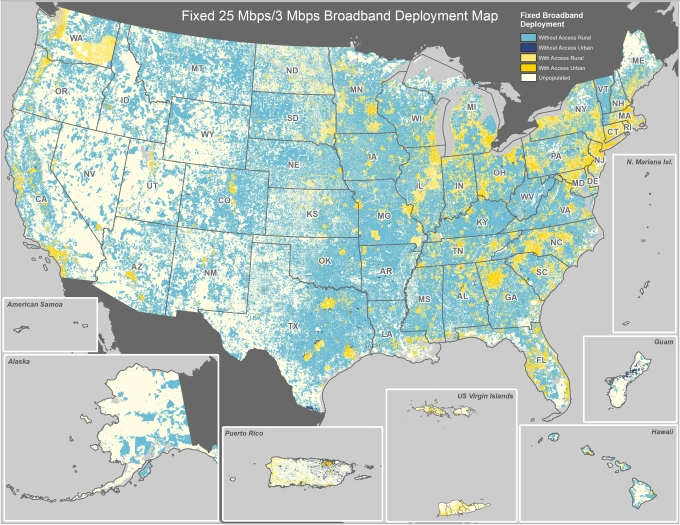
Education, employment, and entrepreneurship are three routes to social and economic advancement. Technology makes these advancements easier and more accessible than ever before in human civilization. That being said, when a community does not have the necessary information infrastructure, it falls impossibly far behind communities with that information infrastructure. Considering a baseline of current technology will advance at the rate of Moore’s Law -- the disparity only increases.
Access to cost effective and reliable broadband technology is tied directly into how successfully communities around the U.S., in both urban and rural areas, will adopt and adapt to the infrastructure of the year 2050. With autonomous vehicles, hyperconnected cities, and other rapidly advancing technology so deeply impacting the chartered course of this future, the U.S. will need an information infrastructure system that can keep up with these changes and provide equitable access for all communities to flourish.
What kind of utility infrastructure would you design? Let HeroX and AEM know, register for the Infrastructure Vision 2050 Challenge!